
What does it actually feel like when the audio tech guy who never wore hearing protection starts treating his own ears like a support ticket? People ask me some version of that more than you'd think.
Quick disclosure before anything else: I get a commission if you buy through some of the links here, at no extra cost to you. I've tested a handful of hearing supplements by now, Audifort included, and this is what my notebook actually says, not a sales pitch dressed up as a diary entry. I'm not a doctor, an audiologist, or anything close to a hearing health professional. Talk to yours before you change anything.
Short answer: something in my logs has actually moved, and I can point to roughly when. Though it's nowhere near the plug-and-play fix supplement marketing likes to promise. Twenty years around live sound and conference AV left me with a high, thin tone that never clocks out, and somewhere in there I stopped just living with it and started treating it like a signal chain with a fault in it (the irony of the AV guy needing his own tech support is not lost on me).
The Frequency Range Nobody Warned Me About
Back when I was cutting my teeth in live sound, I never gave a second thought to NIOSH's occupational noise guidelines, and neither did anyone standing next to me. Line arrays, monitor wedges, feedback nobody caught in time — none of it registered as a problem until years later. What showed up afterward sits in a narrow, high band, closer to a dying fluorescent ballast than anything musical, and it doesn't clock out at the end of a shift the way the gear does.
I started keeping a real log instead of just complaining about it in my head — mostly because "dealing with it" had stopped feeling like a plan and started feeling like a guy refusing to open a support ticket for his own hardware.
What Actually Failed Before Anything Helped?
Before I got methodical about any of this, I spent a stretch trying to fix it with Tibetan singing bowl videos on YouTube, telling myself the resonance would somehow retrain whatever was misfiring. Two weeks in, nothing had shifted, and I filed the whole approach under The Supplement Graveyard, right alongside the bottles that didn't pan out either.
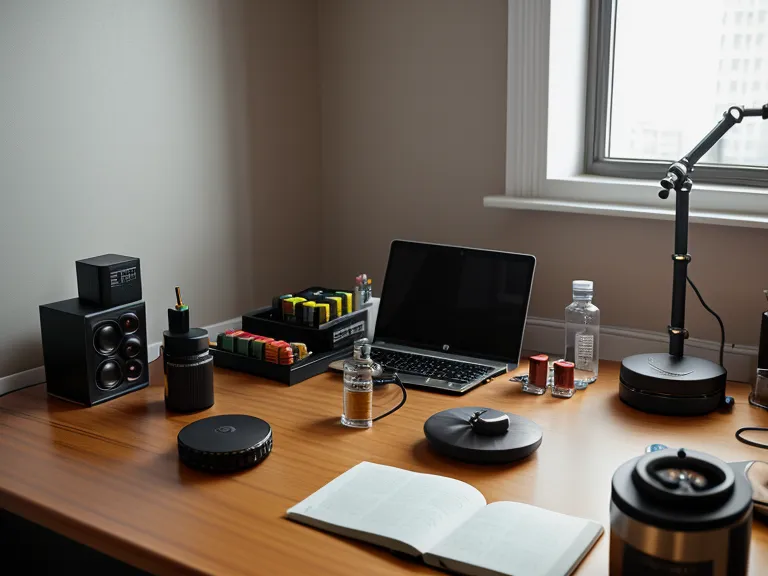
Once that phase ended, I built something closer to an actual process: a severity rating, sleep notes, whatever triggers I could name for the day. Before I add anything new, I get a noise-floor baseline for several days first — no changes, just watching where things sit, notebook open, the trackpad's click about the only other sound competing with the ringing at that hour. Without that baseline, I can't tell if a supplement moved anything or if I just had a good week. I also give myself a clean stretch with nothing running before starting something new, so leftover effects from the last thing don't bleed into the reading. That's basically the process I run every time now, though the full version of it belongs in a different entry, not this one.
I've also mapped out which specific triggers make it spike on a given day — clenching my jaw is one of them — though the full list of what does what is its own separate log, not this one.
Testing a Hearing Supplement Like a Trouble Ticket
By late winter I picked one product to run cleanly on its own: Audifort. I'd read enough to know I wasn't going to fix the actual hardware — the damage is the damage — but I wanted to see if I could clean up how the signal got processed downstream. No stacking it with anything else. One variable, one log, same as isolating a single channel instead of troubleshooting the whole board at once.
A few weeks in, the change wasn't a mute button. Anyone selling you that is selling you something else entirely. It felt more like a gain adjustment than the kind of masking you'd get from a sound-masking app layered over the top; the signal itself seemed to ease off rather than just getting buried under something else. The ringing was still there, but the edges felt less sharp, less likely to catch me off guard when a room went quiet. I wrote up the early version of this in My Three-Month Signal Trace, and the pattern has mostly held since.
Week seven is where my log actually has something worth quoting. I was lying in a dark bedroom, thumb waking the phone to check the time, and the little spike the ringing usually throws when a light or sound hits out of nowhere just didn't show up. No fireworks about it in the notebook — I wrote it down, unremarkable as it looked on the page, and moved on to the next night's entry.

Erratic Schedules Break Any Calibration
A buddy of mine, who's been taking improv comedy classes at Zanies Nashville some evenings, asked me last month if he should start testing something too. His sleep before a show is a mess, adrenaline spiking a couple hours before he's on stage, then a wired hour after even when the set goes fine. My honest answer was that it depends on whether he can hold a steady baseline long enough to actually read the results, because right now his schedule bounces around too much for the numbers to mean anything.
Something like Audifort or Quietum Plus isn't an instant fix regardless — it's closer to ongoing maintenance than a patch you apply once. If your baseline keeps moving because sleep and stress are all over the map, you can't tell what the supplement did versus what a rough week did on its own. I told him to nail down something closer to a regular sleep pattern first, because you can't calibrate a room with the walls still moving. I also told him to watch for wanting it to work — that kind of hoping has a way of coloring what you think you're hearing, and I try to log around it rather than through it.
Managing the Noise Floor for the Long Haul
Walking the loop at Centennial Park a few weeks back, cutting up toward West End Ave before the traffic picked up, I realized I hadn't thought about the ringing in a while. For a guy who tracks this stuff nightly, that's a real result, not a small one.
What I noticed in the first couple of weeks and what actually held up months later turned out to be two different questions, and I keep them separate in the log now instead of assuming week one tells the whole story. The more attention I paid to the ringing early on, the louder it seemed to sit in the mix — a feedback loop feeding itself, which is its own topic for a different entry. I could also break down what each bottle actually works out to per day, or gripe about how many labels hide the real dose behind a "proprietary blend" line instead of just printing the number, but those are separate arguments too.
These days I wear plugs on every job without thinking twice, though I have no idea yet whether that habit pays off ten years from now or just keeps things from getting worse — that gap is long enough that I won't pretend to have an answer. What I'd actually tell someone starting from zero is simpler: get a real baseline before you touch anything, change one variable at a time, and if you want a place to start, checking out Audifort was the first product where my own numbers actually moved instead of staying flat. For the longer version of how I got here, I wrote it up in The Sound Board in My Head.
The lesson I'd pass on isn't which bottle to buy. It's to treat your ears like the expensive gear they are — log a baseline before you change anything, keep your expectations calibrated to a better mix instead of dead silence, and don't wait until the ringing is permanent before you start caring about the levels.
This site is for informational and entertainment purposes only. I am not a licensed healthcare provider, financial advisor, or attorney. Seek professional counsel before making any health or financial decisions.