
Turn a ceiling fan to its lowest setting and it produces just enough white noise to almost bury an 8kHz ring; almost, never quite, and that gap is where I've lived for three years now.
I'm not a doctor, an audiologist, or any kind of hearing health professional — just an audio technician who spent twenty years standing next to speakers and running conference-room AV without ever once reaching for a pair of earplugs. Everything in this piece on tinnitus is what I've logged from testing hearing supplements on myself, not medical advice, so run any of it past your own doctor before you change anything. I keep coming back to Audifort in these notes because it's the one that actually moved the needle in my tracking, and yes, that link earns me a commission if you buy through it.
The Room Gets Louder When Everything Else Goes Quiet
Drop me in the food court at Cool Springs Galleria in Franklin, trays clattering, a dozen conversations stacked on top of each other, and I honestly forget the ring is running. Put me in a dead-quiet room with nothing else competing for attention and it's the loudest thing in the building. Audiologists call what I've got tinnitus. One thing three years of paying attention has taught me: a loud food court doesn't fix anything — it just buries the signal under a bigger one. That's masking, not suppression, and those are two different outcomes if you're trying to actually lower the noise floor instead of just hiding from it. Some of the quiet-room effect is probably just attention — less competing sound around, more of my brain's processing power aimed at the one tone still running — though that's a rabbit hole I'll leave to people who've written whole posts on it elsewhere on this site.

Two Decades Around Speakers I Never Protected
Nashville is a great town to make a living wiring sound systems and a rough one on your hearing. Between the clubs downtown and the conference rooms I've spent my career in, I was around loud gear constantly, and nobody on any of those jobs ever handed me a pair of earplugs or told me I'd want them later. I figured as long as I could still hear the top end shimmer on a snare, I was fine. Three years ago that stopped being true — a faint hum showed up first, and it slowly turned into a steady high-pitched whine that never fully goes away, quiet room or not. My wife tells me I've gotten more obsessive about tracking this than I ever was about closing out work tickets, and she's not wrong. Troubleshooting is just how my brain is wired at this point, whether the broken thing is a mixing board or my own ears.
What Didn't Work Before Audifort?
A friend of mine who's been taking improv comedy classes at Zanies told me to try meditation instead of fighting the ring head-on, and I sort of listened — I pulled up Tibetan singing bowl videos on YouTube instead of an app, on the theory that if I couldn't beat the tone I could at least drown it in a more pleasant one. Two weeks of that and I gave up; it didn't move my log numbers at all, and honestly it just gave me one more sound to track. That kicked off a longer stretch I've started calling my supplement graveyard — close to a dozen products, tested one at a time rather than stacked together, because running two or three at once wrecks your ability to tell which one actually did anything. I gave myself a short break between each one too, so I wasn't carrying leftover effects from the last bottle into the next test. Quietum Plus was in that rotation and helped with general ear comfort without touching the ring much, and I gave ZenCortex a shot on the theory that the brain side of the equation mattered as much as the ear side — I wrote up the full ZenCortex review here if you want the details. Neither one moved my numbers the way I wanted, so around late autumn I decided to simplify and try something else entirely.
Ten Weeks In: Tracking the Noise Floor
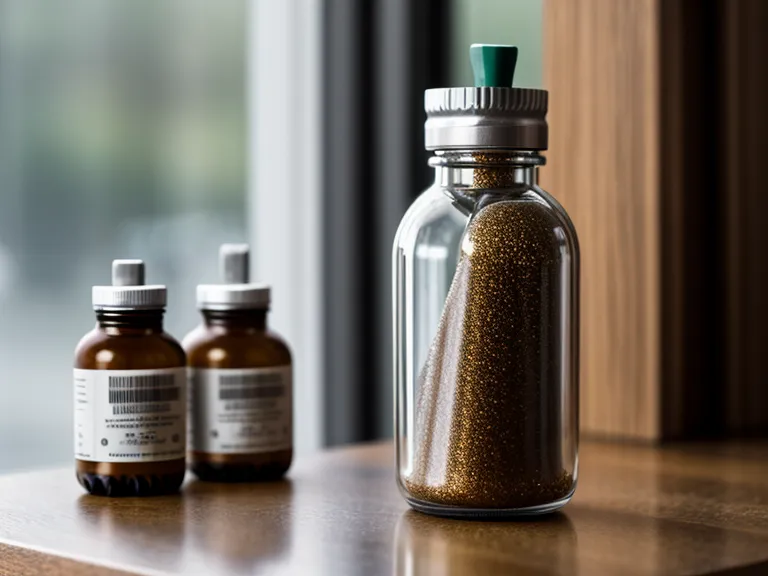
The reason Audifort stuck around isn't that it hit some kind of mute button. Nothing does that. It changed the texture of the ringing, which is a different thing. When I started, a quiet room scored a solid 8 out of 10 in my log, sharp and jagged enough that I couldn't read without a fan or a podcast running underneath it. By around week ten, the entries had shifted, not to silence, but to something that read more like a soft floor noise than an alarm. One evening around then my wife reached for the remote during a show and asked if I wanted it louder, and I told her it was fine as it was; I could follow every line of dialogue without the ring smearing the edges of the words, which isn't something I'd have said back in week one. That's the distinction I actually care about in this log: a one-off spike, or an honest shift in the baseline. By week ten, enough good entries had piled up that it read like the second one. I try to score the night before I let myself think about which week of testing I'm on, if only so I'm not grading myself easier just because I want the bottle to be working. For more on how I set up that baseline in the first place, I've got a longer piece on troubleshooting the noise floor.
Consistency Beats a Quick Fix
None of this holds up if I only take it during a bad flare. I tried that early on and it did almost nothing, because by the time the ringing spikes you're already playing catch-up. Daily use is what actually holds the floor down over time, closer to keeping a rack powered in a climate-controlled room than power-cycling gear in a damp garage every time you need it. Sound pressure and calibration are the terms I'd use if I were describing this on a job site. Sound pressure that used to spike every time I had a rough day now mostly holds steady. I've also started paying attention to what pushes it louder on any given day: poor sleep, a stressful shift, too much salt at dinner, without pretending I've nailed down a clean cause for any one of them; I wrote more about the sodium angle specifically in my notes on sodium and tinnitus volume. On the cost side, I did the same rough math I'd run on any piece of gear. What a bottle actually works out to per day of use rather than what it costs up front was my calculation before deciding it earned a permanent spot in the budget. Audifort fits into that routine better than anything else I've tried because it isn't trying to over-process the signal. It just holds the floor steady.
Is Audifort Worth Adding to Your Routine?
After close to nine months of logging, Audifort is still the one bottle I haven't stopped buying, and it's had the most consistent effect on the texture of my ringing of anything in the graveyard. It's priced like a premium product, and the label lists its ingredients plainly, though like most blends it doesn't break every dose out milligram by milligram; about the same level of transparency as most labels I've read in this category. Worth saying plainly: I never had anyone check whether something mechanical, like a blockage, was part of my problem before I started down the supplement road, and that's a different troubleshooting path than the one I'm walking here, one worth ruling out with an actual doctor first. If you want something with a longer track record on the market, Quietum Plus is a reasonable alternative that a few people I know in the AV world still use, and if focus alongside the ringing is your bigger concern, ZenCortex is worth a look for that angle specifically. These days I also keep a pair of earplugs in my pocket for anything loud, not the foam kind that muffles everything unevenly, but ones built for flatter attenuation so conversations still come through clearly, a pair of high-fidelity earplugs I should have owned twenty years ago. They won't undo any of the damage already logged; that part of the signal chain is fixed. But they keep the floor from climbing any higher than it already has. If you're just starting to track your own ringing, my honest advice is to grab one product, keep a real log instead of a gut feeling, and give it more than a week before you decide whether it's doing anything at all.
Audifort
Pros
- ▸ Softens the 'jagged' edge of high-frequency ringing
- ▸ Provides a stable 'noise floor' with consistent daily use
- ▸ Natural ingredient list with clear transparency
- ▸ Helps quiet rooms feel manageable again
Cons
- ✗ Premium price point compared to entry-level vitamins
- ✗ Requires consistent daily use to see real signal stability
This site is for informational and entertainment purposes only. I am not a licensed healthcare provider, financial advisor, or attorney. Seek professional counsel before making any health or financial decisions.