
A decibel meter doesn't care if you had a rough night — point it at the same sound and it reports the same number every time. Your own ears, measuring your own tinnitus, don't work that way, and that single difference is why most tinnitus management experiments collapse before the first week of supplement testing even starts. People keep trying to treat a subjective signal like an objective one, then wonder why two identical doses on two different Tuesdays produce two completely different verdicts.
Twenty years of rigging conference-room AV systems and mixing front-of-house for touring acts taught me plenty about signal chains and nothing about protecting the one input device I actually own for life — there's a well-known occupational noise-exposure standard the Occupational Safety and Health Administration maintains that most of us in live sound blew right past for years without a second thought. The ringing that followed didn't make me humble about hearing health — it just gave me a new system to obsess over, which my wife will tell you is a very on-brand development.
Tinnitus Loudness Depends on Ambient Noise Levels
The myth goes like this: tinnitus has a fixed volume, and if a supplement works, that volume should drop in any room, at any hour, full stop. It's a tidy theory, and it's wrong almost every time. Perceived loudness is a ratio, not a reading. Your brain is constantly comparing the ringing against whatever ambient noise sits around it, the same way a vocal mic sounds hot in a dead-quiet booth and barely registers next to a drum kit. Test a capsule in a silent bedroom at midnight and the result looks like a disaster. Test the exact same capsule in a kitchen with a dishwasher running and it looks like a minor miracle. Neither reading tells you anything about the supplement — both are telling you about the room. (There's a more rigorous way to pin that ambient reference point down into something you can actually compare day over day, and I've broken that process down in its own piece elsewhere; for now, just internalize the trap. Never compare a quiet-room impression to a noisy-room one and call it data.)

The Myth of the Perfectly Pitch-Matched Ear
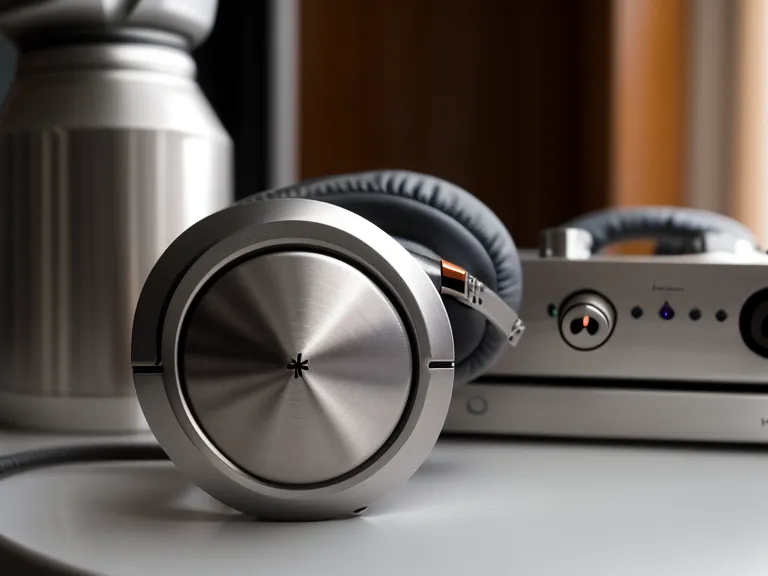
A second myth sits right next to the first: that you need to nail your tinnitus down to an exact frequency (sweep a sine wave until it locks to whatever pitch your particular notch lives at) before any supplement trial counts for anything. Pitch-matching is a legitimate exercise, and I've gone down that road myself with an audio interface and a pair of reference headphones (An Audio Tech's Late-Night Log: Testing 4 Ear Supplements to Tame the Constant 4 kHz Ringing walks through exactly how), but it answers a different question than the one you're actually asking during a supplement trial. Knowing your frequency tells you what your tone sounds like. It does not tell you whether a capsule changed anything. For that, you need consistency of conditions, not precision of pitch.
Your Jaw and Your Sleep Skew the Reading Before Any Capsule Does
Plenty of so-called supplement failures are really confound failures. Three days of hauling gear and clenching through a stressful contract will push the ringing louder than any bottle on the shelf could soften it, and if you don't know that's what happened, you'll blame the pill instead of the week you had. Jaw tension, neck strain, a bad night of sleep, an extra pot of coffee, all of it can turn the dial up independent of anything you swallowed, and none of it requires a biology lecture to account for. You just have to notice it's happening and write it down instead of pretending the capsule is the only variable in the room.
A reader named Margo Hubbard emailed me a while back, before she started a new product, with a simple but sharp question: how do you know if a bad week is the supplement or just a bad week? That's the whole ballgame right there. The answer isn't a better capsule. It's a cleaner test.
Run the Audio Troubleshooting Habit, Not a Lab Session
You don't need an audio interface, a sine-wave generator, or a spare room built out like mine to get something usable. (I did convert a spare bedroom into a tracking space: a card table, a laptop, a cheap USB interface, and a dry-erase board on the closet door that's turned into nothing but a running tally of which bottle I'm on, and even I'll admit most of that is overkill for what the actual data needs.) The one habit that matters: check in at the same two points every day, under conditions you could describe to someone else in a single sentence, and rate how much the ringing is costing your attention on a plain one-to-five scale rather than guessing at a decibel number you don't have the gear to measure anyway. Hold that steady before you touch anything new. The rest of the protocol — how long to hold a trial and how to rotate products without muddying the data — is its own piece (how to run an honest baseline test before trying any hearing supplement covers it), but the two-check-in habit is the part people skip, and skipping it is exactly why so many supplement verdicts don't hold up.

Why Chasing Total Silence Undoes Good Supplement Testing
The flip side of that myth is just as common: the belief that a supplement only counts as working if the ringing vanishes outright, and anything short of silence is failure. Chasing total silence tends to backfire. The more you monitor the tone like a mix engineer re-soloing a channel that's already been dealt with, the more your nervous system treats it as something worth defending against. A drop in how much the ringing costs your attention while you're mowing the yard counts as real progress, even when the raw loudness hasn't visibly moved, and I went deeper into why constant masking works against that in how to deal with tinnitus at night without using masking machines.
None of this makes the search for something that helps pointless. It just narrows what counts as proof. I tried a single acupuncture session a while back on a friend's recommendation, and the ringing came back noticeably louder for about two days afterward, which told me more about my own reaction to new sensory input than it did about acupuncture as a category. My neighbor Frank, who has no idea what any of this means and asks about it anyway with a cold drink in hand over the fence, still thinks I should just turn the volume down on something. I've stopped trying to explain that there isn't a dial.
The Real Takeaway for Tinnitus Management
Calibration isn't about owning better gear or nailing a frequency to the decimal. It's about refusing to grade a supplement on a single noisy data point. Fix your check-in times, fix your rating scale, write down what else was going on that day, and give any one product its full window before you decide it did or didn't work. That's the whole protocol, and it costs nothing but a notebook and the patience to resist judging week one.
This site is for informational and entertainment purposes only. I am not a licensed healthcare provider, financial advisor, or attorney. Seek professional counsel before making any health or financial decisions.