
Late one night in the spare bedroom, the silence was so loud it felt like a feedback loop from a blown monitor that I couldn't reach the power switch for. I was staring at the blue LED of my audio interface while a high-pitched E-flat in my head perfectly matched the hum of the cooling fan, and it occurred to me that I had spent twenty years fixing everyone else’s signal chain while my own was permanently red-lining. My wife says I’m more obsessive about these tracking logs than I ever was about closing work tickets at the venue, but when you have a 15-kilohertz sine wave living in your skull, you start looking for the mute button anywhere you can find it.
Two decades of Nashville soundboards without earplugs—because I was the 'golden ears' guy who thought foam plugs would ruin the mix—finally pushed my hearing into the red zone about three years ago. I’m not a doctor, an audiologist, or even a guy who remembers to take his truck in for an oil change on time, but I am a technician. When a rack unit starts buzzing, you don't throw it away; you troubleshoot the input. That’s how I’ve started treating my ears. I’m trying to manage the signal-to-noise ratio of my life, even if the 'noise' is coming from inside the house.
The Calibration Period: Starting the Log in Early May
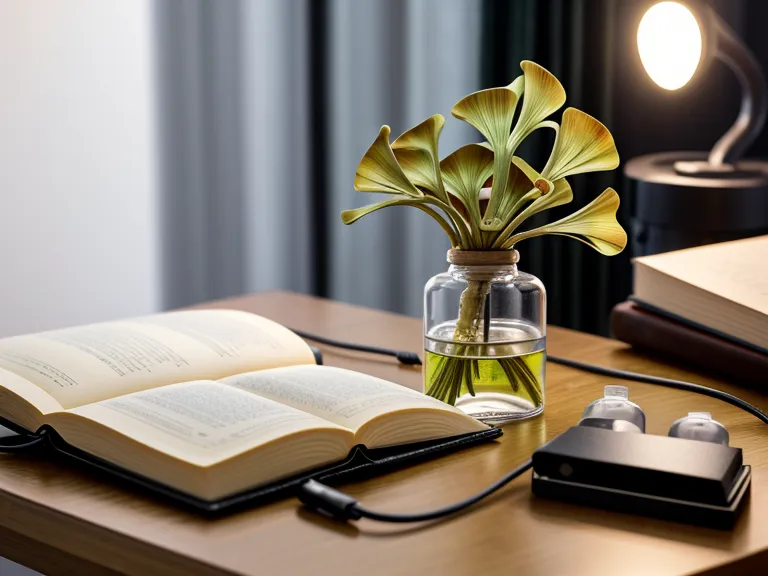
Early last May, I decided to stop guessing and start logging. I treated my supplement intake like a bench test. I settled on a combination of Ginkgo Biloba and Zinc, mostly because they are the two most common 'fixes' you hear about in the green rooms and AV forums. I wasn't looking for a miracle cure—twenty years of decibel abuse doesn't just vanish—but I was looking for a way to lower the noise floor just enough to sleep without a white noise machine cranked to eleven.

I made sure the Ginkgo I picked met the standard pharmaceutical concentration of 24% flavone glycosides. In the audio world, consistency is everything; if your voltage fluctuates, your gear acts up. I applied the same logic here. I also kept a close eye on the Zinc. I knew the Upper Tolerable Intake Level (UL) for adults is 40 mg, so I wasn't about to go over that. After all, I’ve seen what happens when you over-drive a circuit—you just get more distortion. I stayed well within the safe limits, tracking every dose in a gridded notebook next to my bed.
The first few weeks were uneventful, which is typical for any system recalibration. You don't plug in a new processor and expect the room acoustics to change instantly. I noticed a distinct metallic tang on the back of my tongue that started appearing about twenty minutes after my morning supplement dose, which was a strange bit of sensory feedback I hadn't expected. It was like licking a 9-volt battery, but much fainter. I figured it was just the system 'booting up' for the day.
Six Weeks In: Identifying the 'Clipping' Sensation
By mid-June, after about six weeks of consistent input, I noticed a change in the character of the sound. If you’ve ever worked with a digital limiter, you know the difference between a smooth roll-off and hard clipping. My tinnitus has always felt like 'hard clipping'—jagged, sharp, and physically irritating. It wasn't that the 'gain' or the volume of the ringing had actually dropped, but the sharp edges felt a bit more rounded off. During the morning commute, which is usually when the silence of the car makes the ringing feel unbearable, the sensation felt less jagged.
I started recording 'severity impressions' on a scale of 1 to 10. Most days in Nashville, I’m at a solid 7. Around this time, I was hitting 5s and 6s more frequently. It wasn't that the sound was gone; it was that the signal felt less 'hot.' In my notes, I wrote that the noise floor seemed to have dropped by maybe a few decibels, or at least the perceived harshness had. It was a small win, but in this business, you take what you can get. I was still hearing the high-end hiss—well below the 20,000 Hz upper limit of human hearing, probably closer to 12 or 14 kHz—but it wasn't commanding all the headroom in my brain anymore.
This is where my 'audio tech' mindset might differ from the standard advice. Most people take supplements to kill inflammation or 'cure' the sound. But I started thinking about the dorsal cochlear nucleus—the part of the brain that generates these phantom sounds. I realized that if I pushed the 'antioxidant gain' too high with too many different pills, I might actually be hindering my body’s natural adaptation. Sometimes the brain needs to hear the noise to learn how to ignore it. It’s like a noise-canceling circuit; it needs a reference signal to create the phase-inverted wave. If you mess with that signal too much, the system can't calibrate.
Mid-July: The Summer Heat and System Stress
By mid-July, the Nashville humidity was at its peak, and I was doing a lot of outdoor load-ins. Heat and stress usually spike my ringing like a faulty ground loop. However, the Ginkgo and Zinc regimen seemed to be providing a sort of 'buffer.' I wasn't getting those sudden 'attacks' where the ringing spikes to a 9 and makes me lose my balance for a second. It felt more like a stable, managed input. I was even able to spend a few hours in the shop without feeling like the ambient hum of the equipment was driving the internal ringing into a frenzy.
I’ve written before about how I’ve had to swap my rack gear for a supplement shelf, and you can see my earlier thoughts on Tinnitus Troubleshooting: Why I Switched My Audio Rack for a Supplement Shelf After Twenty Years of Feedback. It’s a weird transition, going from fixing physical cables to trying to fix neural pathways. My wife still rolls her eyes when she sees me charting my 'internal noise floor' every night, but she’s also noted that I’m not asking her to repeat herself quite as often when the TV is on. That’s a metric I can’t ignore.

Late August: Final Impressions of the Four-Month Test
By the time late August rolled around, I had a solid four months of data. My conclusion was that while these supplements aren't a 'mute' button, they act like a decent outboard compressor. They smooth out the peaks. The most important lesson I learned was about the 'Unique Angle' I mentioned earlier: aggressive protocols aren't always better. I found that staying at a steady, moderate dose was more effective than trying to 'blast' the tinnitus with every vitamin on the shelf. When I tried to add more to the mix, the 'metallic tang' got stronger and the ringing actually seemed to get more erratic, as if the system was struggling to process the extra data.
I’m obviously not a health professional—I’m just a guy who ruined his ears and is now trying to live with the consequences. If you’re dealing with this, you should absolutely talk to your own doctor or an audiologist before you start your own bench test. Tinnitus is a complex system failure, and what works for my noise-induced damage might not work for someone else’s. But for me, the methodical tracking has turned the ringing from an 'uncontrolled system error' into a 'managed input.'
There is no mute button for twenty years of neglect, but tracking the noise floor makes the phantom sounds feel like a part of the mix rather than a total system failure. I'm still looking for ways to further optimize the signal, and I've even looked into more specialized blends. You can read about how I applied this same gear-first mindset to a specific formula in my notes on Troubleshooting the Feedback Loop: How an Audio Tech’s Gear-First Mindset Led to Audifort. For now, the Ginkgo and Zinc stay in the rack. They aren't perfect, but they keep the signal clean enough to keep working, and that’s more than I expected when I first started this log back in May.
This site is for informational and entertainment purposes only. I am not a licensed healthcare provider, financial advisor, or attorney. Seek professional counsel before making any health or financial decisions.