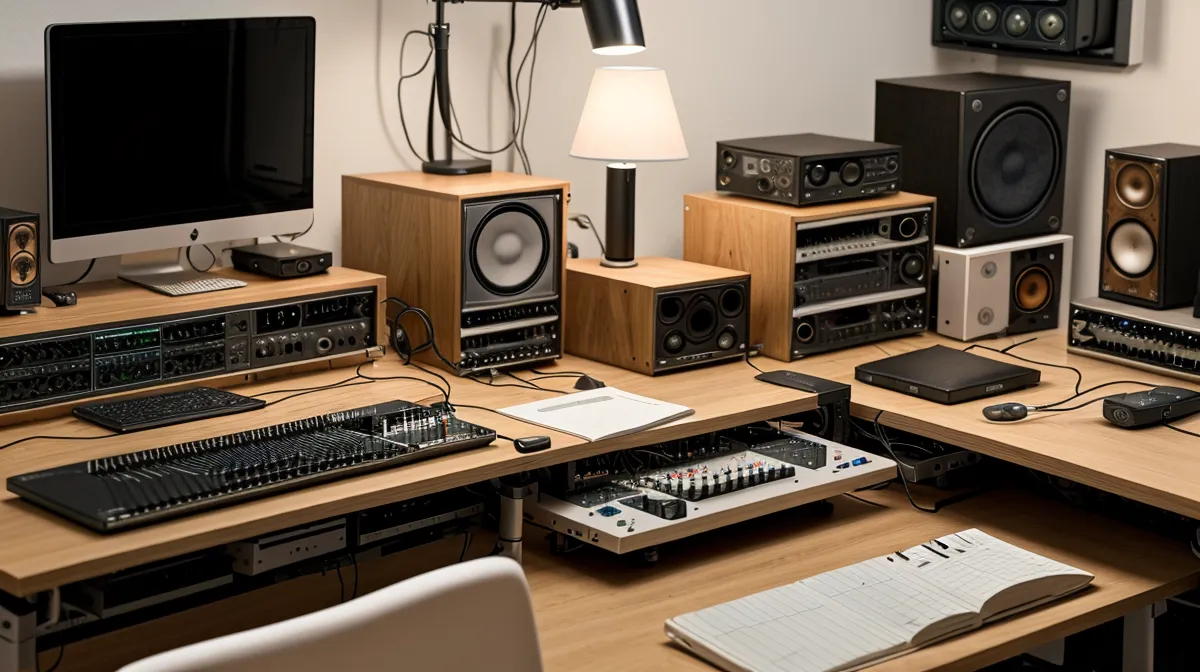
I was standing in a silent server room late one night last winter, my hand pressed against the cold, vibrating metal of a rack, when I realized the hard drives weren't the only thing spinning. The high-pitched hum in my head was actually louder than the cooling fans—a persistent 6kHz whine that simply refused to hit the mute button.
Before we dive into the signal chain of my ears, I need to be clear: I’m not a doctor, an audiologist, or a health professional of any kind. I’m just an IT audio technician in suburban Nashville who spent twenty years ignoring the OSHA permissible exposure limit of 85 decibels. This site uses affiliate links, meaning I earn a commission if you buy something through them, though it’s at no extra cost to you. I only recommend supplements like /out/main because I’ve personally logged their effects in my troubleshooting spreadsheet. You should always talk to your own doctor or audiologist before trying a new regimen.
The Signal Chain: 20 Years of Unprotected Decibels
For two decades, I made a living wiring conference rooms and mixing live monitors across Nashville. I was the guy who could find a ground hum in a stadium-sized PA system in under ten minutes, yet I couldn't be bothered to spend twenty bucks on a decent pair of earplugs. I spent five thousand dollars on a digital mixing console last year, but for most of my career, I treated hearing protection like a luxury I didn’t need. It’s the ultimate irony: the audio guy who ruined his own hearing.
In this industry, an 8 to 10 hour shift is the standard for load-in and soundcheck. That’s ten hours of constant exposure to everything from power drills to snare drums. Eventually, the signal-to-noise ratio in my own head went haywire. By the time the ringing started three years ago, it wasn't just a sound; it was a permanent high-frequency feedback loop, usually hovering in that piercing 4000 to 8000 hertz range that makes quiet rooms feel more oppressive than a rock concert.
The Troubleshooting Phase: Debugging the Tinnitus
Once I realized the ringing wasn't going away, I did what any tech would do: I started troubleshooting. I treated my ears like a faulty signal chain that needed debugging. I started a spreadsheet to track everything—caffeine intake, sleep quality, and of course, supplements. I went through a 'trial phase' with several products like Zeneara and ZenCortex, logging the results just like I’d track a recurring hum in a rack.
I even had a moment of total failure where I spent a week wearing heavy industrial earmuffs around the house. I thought that 'total silence' would give my ears a chance to reset. Instead, I learned the hard way that when you block out all external sound, the internal ringing actually gets louder. It’s like turning up the gain on an empty channel—all you get is more noise floor. It was around that time, back in late November of 2025, that I realized I needed a different approach to 'EQ' my internal environment.
I’ve written before about this methodical approach in my Audio Tech’s Ledger, where I break down why treating your ears like hardware actually makes sense when the software starts glitching.
Enter Audifort: Lowering the Noise Floor
I started testing Audifort in early March after my previous 'bench tests' with other brands felt like they were just providing empty gain. The initial few weeks were unremarkable—no sudden silence, no miracles. But I kept at it, following the dosage on the label and keeping my spreadsheet updated. By the time about two months had passed, I noticed a subtle shift in the 'noise floor' of my head.
In audio, the noise floor is the level of background hiss in a system. You can never get it to zero, but you can get it low enough that it doesn't interfere with the music. That’s what started happening with Audifort. The 6kHz whine didn't disappear, but it felt less 'gainy.' It was less aggressive, moving from a front-of-house blast to a distant background hum. It made the quiet moments in suburban Nashville feel a little more like actual quiet again.

The 'Zap' and the Reality Check
It’s not a perfect fix. I remember one sweltering afternoon in August, sitting at a quiet dinner, when I felt a sudden, sharp 'zap' sensation in my left ear. It was so physical that I instinctively reached for a volume knob on the table that wasn't there. My wife just rolled her eyes; she says I’m more obsessive about these supplement logs than I ever was about work tickets. But that moment reminded me that I can't undo twenty years of 115dB exposure. I’m managing a legacy system now.
For those interested in how this compares to other options I've tracked, you might want to look at my notes on Troubleshooting the Signal Chain, where I compare this experience to my earlier trials with other formulas.
The Construction Worker Perspective: Why Decibel Buffers Matter
One thing I’ve realized through this process is that standard advice often fails people in high-noise environments—like the construction workers I see on job sites or the guys in heavy machinery shops. Most supplement protocols assume you're sitting in a quiet office. But if you're still being hammered by high decibels daily, your ears are under continuous trauma that can override any recovery.
In my experience, you have to treat a supplement like a buffer. It’s not just about 'fixing' the damage; it’s about providing the internal components with enough support to handle the ongoing signal load. If you’re in a loud trade, you need something that addresses the ear-brain connection more robustly. While I’ve saved Quietum Plus for a future test, Audifort seems to have the right 'impedance' for someone whose ears are still actively working in loud environments.

Final Calibration: Getting the EQ Right
Looking back at my logs from late autumn 2025 through the end of summer 2026, the pattern is clear. Finding the right supplement is a lot like finally getting the EQ right on a difficult room. You can’t change the acoustics of the building—or in my case, the physical damage to my inner ear hairs—but you can adjust the frequencies until the sound is tolerable.
Audifort has become a permanent part of my 'rack' because it’s the first thing that actually felt like it was lowering the master fader on the ringing. It’s not a mute button, but it’s a significant reduction in the feedback loop. If you’re tired of the constant high-end whine and want to see if you can lower your own noise floor, you can check the current pricing and ingredient transparency on the official Audifort page, as those details can change over time.
I'll keep updating my spreadsheet. After all, once a troubleshooter, always a troubleshooter. I might have ruined my ears in the 2000s, but I’m doing my best to mix a better sound for the 2020s.
This site is for informational and entertainment purposes only. I am not a licensed healthcare provider, financial advisor, or attorney. Seek professional counsel before making any health or financial decisions.