The last road case thunks up the ramp at the Bridgestone Arena loading dock, and the kid pushing the cart beside me clocks the foam plugs in my ears and asks why a guy hauling speakers bothers with hearing protection. Twenty years of audio tech life, I tell him, and I never wore them once. Which is exactly why my evenings now go to tinnitus testing and a notebook full of hearing support experiments instead of anything fun.
Quick disclosure before the troubleshooting starts: this site runs on affiliate links, so if you buy a hearing supplement through one of mine, I earn a commission at no extra cost to you. Everything I point at, I've run through my own bench testing and logged by hand. I'm no doctor or audiologist, just a guy with a permanent tone in his head and a spiral notebook full of data. People ask me the same handful of questions about all this, so here are the honest answers.
How did the ringing actually start?
Picture rolling out of a venue after a three-day corporate gig. Wireless mic wrangling, line-array babysitting, speakers who think volume equals authority. Finally killing the engine in your own driveway, expecting silence. Instead there's a sharp tone parked at the top of the register, like a 15 kHz sine wave piped straight into your skull. I actually checked my hands for a phantom monitor feed out of pure reflex before it landed: the signal was coming from inside the headset, and it has never once left. That's where my life with tinnitus began, and the three years since have filled a spiral notebook with more dead ends than wins. The whole graveyard lives in my notebook full of tinnitus failures. The one thing worth flagging up front: a fresh tone that's still there the morning after a loud stretch isn't the "concert ear" you sleep off. That's worth getting looked at, not waited out.
Is the ringing a real sound or am I imagining it?
Short version, and it's the part that took me longest to swallow: the tone isn't a sound arriving at my ear at all. Years of standing next to PA stacks without plugs wore down the tiny hair cells inside the ear, and once those cells stop feeding the system a clean input, the auditory wiring compensates by firing on its own. The brain reads that stray activity as a sound that simply isn't in the room. In console terms, it's a channel with nothing patched into it that still throws off its own self-noise, and the desk insists on interpreting that hiss as a tone. The ringing is a signal my own head is generating, not something leaking in from outside.
That changes what you can realistically chase. There's no fader for a signal your brain is producing; you can't EQ out something that was never an input. So the target isn't a cure or an off-switch, it's the signal-to-noise ratio. Get the rest of life steady enough and full enough that the tone slips back underneath everything else. Anybody promising "gone forever" is selling you something. My honest bar is "background," and that's the standard I judge every tool against.
Troubleshooting by elimination
The instinct from two decades of fixing broken signal chains is to isolate the source: change one thing, measure, repeat. My first real mistake was skipping the "measure" part entirely. I started swallowing supplements before I'd ever written down what a normal day even sounded like. No severity baseline, nothing to hold the new readings against. It's like tuning a mixing board when you've never heard the clean signal: you have no idea what "better" is even supposed to look like. A whole stack of early readings turned out useless that way, before I started logging a 1-to-10 severity score every morning, dead sober, before coffee.

Stacking everything at once was the next thing that blew up in my face. Eager to feel something, I'd run two or three formulas together. When a quiet morning finally showed up, I had no clue which bottle to credit, or whether any of them mattered at all. That's not testing, that's guessing with extra steps. Now it's one product at a time, a fixed window of about sixty days before I'll trust the read, and a gap in between so the last thing clears out before the next one starts. The whiteboard on my closet door tracks nothing but which cycle I'm on.
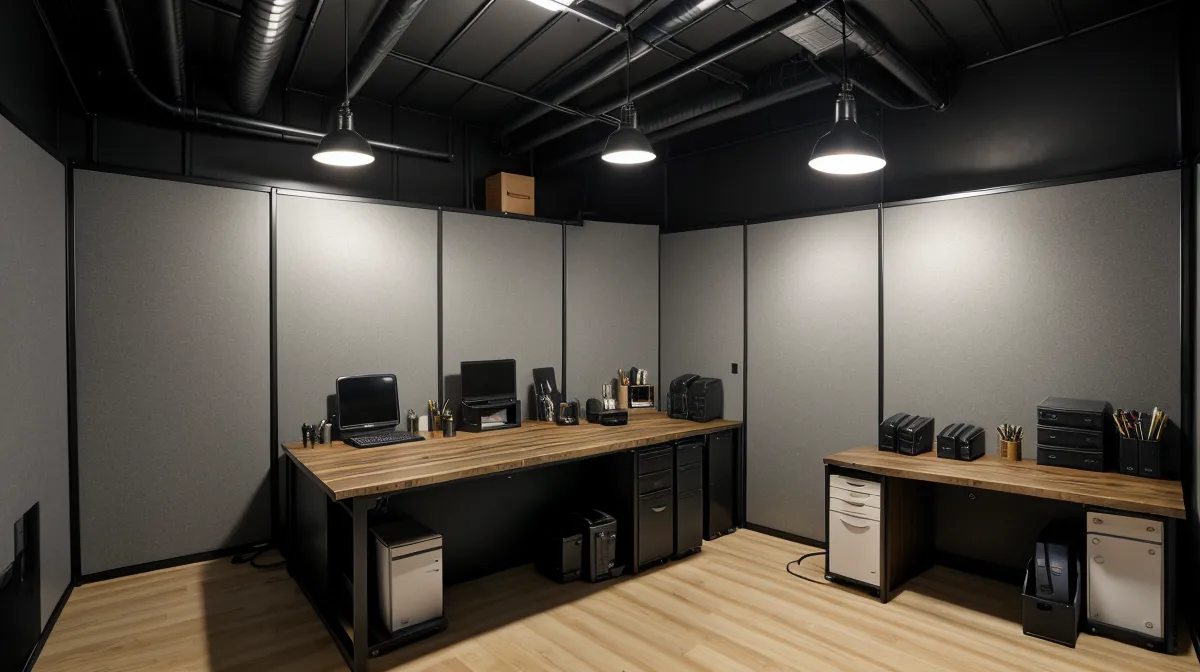
Most of this happens in a back bedroom out in Antioch that I turned into a listening room. Folding table, laptop, a USB interface, foam panels a buddy and I dragged out of a conference room that was getting gutted. With the window shuttered and the house asleep, the only thing competing with the tone is the soft click of the trackpad as I type up the night's numbers. That dead quiet is the whole point: it's the cleanest test environment I've got, even though it's also exactly where the ringing is loudest.
Is it the supplement or just a good night's sleep?
Some of my proudest early "results" turned out to be nothing. I'd log a calm day, feel certain the new capsule was working, write it up like I'd cracked the code. Then realize I'd also slept eight hours for once instead of four. Sleep moves this tone more than almost anything that comes in a bottle. Crediting a supplement for what was really one rare good night is the easiest trap in the whole hobby, and I fell into it more than once before I caught the pattern.
Here's the rule I run now: every severity score gets a sleep number written right next to it. If a "good" day lines up with a good night, that's your confound, not your proof. Discount it. A formula only earns credit when the quiet days start showing up on ordinary, mediocre-sleep nights too. Sleep is just the loudest of the triggers I track; sorting out the rest is its own separate project. Without that column in the notebook, you're not measuring a supplement. You're measuring how rested you are.
And the masking gear? A white noise machine on the nightstand was supposed to be the easy win. For three nights it helped. Then my brain quietly folded the hiss into the ringing until the two were one solid wall of sound, and I was worse off than when I started. Not every tool that should work, works; that one went into the graveyard with the rest of the dead ends.
Hearing support that earns a place in the rack
Right now the formula getting the most notebook time is Audifort. In my logs the 9-out-of-10 spike days (the screaming-tea-kettle ones where I lose the thread of a conversation) turn up less often than they used to, and I keep one simple marker for a good morning: my wife's spoon taps the rim of her cereal bowl and that little click lands clean instead of vanishing under the tone. I won't call that a cure. I don't hang that word on anything. But I dug into the why-this-one reasoning in my piece on why Audifort outperformed my previous setup.
The legacy gear still keeps a slot, too. Quietum Plus rode along as my steady maintenance pick for a good while, and it held my baseline level. Until it plateaued, which is the whole reason I started auditioning replacements; when a preamp stops giving you headroom, you swap it, you don't keep cranking it and hoping. My fuller write-up sits in the 2026 Quietum Plus log. Audifort's 60-day money-back guarantee matters more than it sounds, by the way. A fair test takes about that long anyway, so the window roughly matches the cost of finding out.
Plenty of people arrive at the same patterns from the other direction. Delroy Baines, another audio tech who wrecked his ears on decades of in-ear monitor work, found the site and said his frequency profile lined up almost exactly with mine. We've been trading notes since; he logs his own severity readings in more methodical detail than I do, which is genuinely saying something. Comparing two stubborn sets of ears beats trusting one.
What I tell techs who notice their own ringing
Lamont Pickett still works live events, and Lamont still won't admit the ringing in his own ears is a problem. Classic. We came up on the same regional circuit hauling PA rigs, lost touch when I went corporate, and reconnected the day he texted me about a whine that wouldn't quit after a run of festival dates. What I tell him is what I'll tell anyone: this damage doesn't reverse, and protection does nothing after the fact. There's no catching up once the tone starts, so the plugs go in before the first downbeat, not after your ears are already singing.
None of this is medical advice, and I'm careful to say so. I'm the audio guy who ruined his own hearing, not anyone you should take health orders from. See a doctor or an audiologist about your own ears; they can rule out the things a notebook never could. What I can hand you is the troubleshooting discipline: baseline first, one variable at a time, track your sleep beside every reading, and give anything a couple of months before you call it. That part transfers to just about any problem worth solving.
Protect what's left
If I could hand the younger version of me one thing back at that loading dock, it'd be a pair of high-fidelity filters and a blunt talk about what he's about to lose. Since that's not on the menu, I protect what's still here. Plugs go in even for the vacuum cleaner, and yes, I'm fully that guy now. If you're tired of the tone running your nights, start your own notebook, log your spikes, and if you want somewhere to begin the testing, Audifort is what's steadying my noise floor at the moment. Though your ears may file a different report than mine.
Keep your faders up and your protection on. The quiet's still in there somewhere. Some nights you just have to work a little harder to hear it.
This site is for informational and entertainment purposes only. I am not a licensed healthcare provider, financial advisor, or attorney. Seek professional counsel before making any health or financial decisions.