
The difference between an ear health supplement that quiets noise-induced hearing loss and one that just keeps you occupied for a couple of months while you hope the ringing fades on its own is substantial. After running four ear health supplements marketed for tinnitus relief through the same side-by-side test, I've landed on a defensible answer. It depends entirely on which specific problem you're trying to solve, because it turns out they are not solving the same one.
Quick disclosure before any of that: this site runs on affiliate links, and if you buy through one of mine I earn a commission at no extra cost to you. I only write up ear health supplements I've actually opened, swallowed, and tracked — the empty bottles are stacked on my desk as proof (my wife finds this mildly concerning, for the record). None of this replaces an audiologist or a doctor. I'm an IT audio technician, not a medical professional, and everything below should be read as one guy's bench notes, not clinical advice.
Two decades behind front-of-house consoles and inside conference-room AV racks, no earplugs, ever (nobody on any crew I worked with ever flagged it as a problem, so neither did I) — which is a fairly funny way for the guy mixing everyone else's sound to end up with a permanent problem in his own signal chain. The ringing settled in high and thin, locked to one specific pitch. I matched it myself against a tone generator app, the same way I'd hunt down feedback on a PA system, and it sits up around 4 kHz whether I like it or not.
My wife clocked the obsession before I did. I started logging ringing severity next to sleep notes and whatever supplement bottle I was mid-cycle on, treating my own ears the way I'd treat a busted preamp — isolate the variable, swap the input, see what changes. The gear-first version of that whole approach, from before I'd even settled on a testing method, is written up in Troubleshooting the Feedback Loop: How an Audio Tech's Gear-First Mindset Led to Audifort.
Before any of the four supplements in this comparison, I ran through a stretch of Tibetan singing bowl sessions pulled off YouTube, convinced some frequency-masking sound therapy trick would retrain my attention away from the tone. Two weeks in, nothing had moved — the ringing was exactly as loud, and I'd just added forty minutes of sitting cross-legged to my evening. A friend of mine, who spends his free nights taking improv comedy classes at Zanies here in Nashville, asked why I'd bothered when actual supplements were sitting right there on the shelf. Fair question. Not every fix for a noise problem comes from adding more sound.
Why Generic Vitamins Don't Move Noise-Induced Hearing Loss
Grocery-store multivitamins were the first thing anyone suggested to me — B-complex, zinc, magnesium, the usual shotgun blend. I ran one for a stretch and logged it next to everything else, and it did exactly nothing I could point to on my severity notes. That's less a knock on the ingredients and more a question of what they're actually for: a broad multivitamin is built to patch a general gap, not to sit at a useful level for one specific, narrow complaint. If you don't actually have the gap, you're not correcting a deficiency — you're just adding noise to a stack that's already crowded.
How Do You Actually Compare Four Tinnitus Relief Supplements?
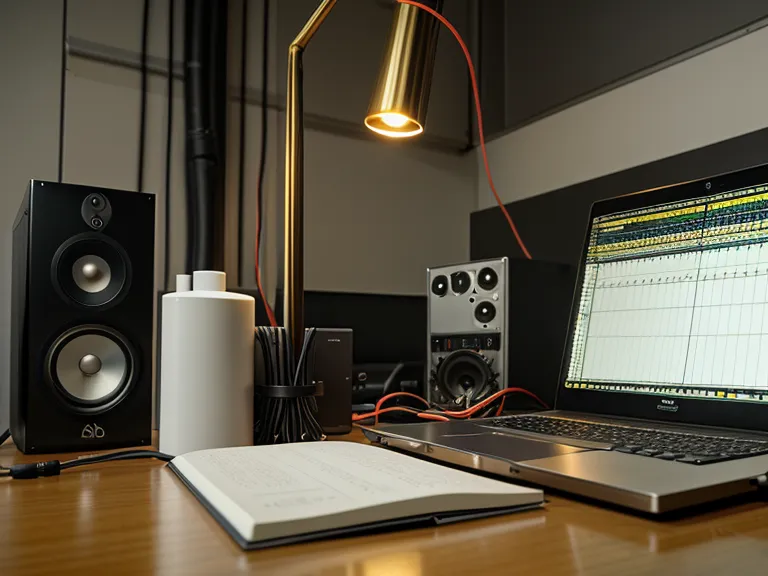
Here's how I actually did it: you can't compare four ear health supplements with a single bottle and a gut feeling, so I built something closer to a signal test than a product review, continuing the same tracking approach I first laid out in An Audio Tech's Late-Night Log: Testing 4 Ear Supplements to Tame the Constant 4 kHz Ringing. Every formula got measured against the same noise-floor baseline — a quiet-room severity rating logged before I touched anything new — and I gave each one a washout stretch afterward before starting the next, so a leftover effect from the last bottle couldn't bleed into the next one's numbers. I also rotated through them one at a time instead of stacking two or more together, since stacking would have made it impossible to credit any single product for a change, and I ran a deliberate stop on each one at some point, because a lot of supplement "results" turn out to be a discontinuation rebound dressed up as a real effect.
Regular exposure still matters just as much outside a controlled test. A loud rehearsal room, a stretch of highway with the windows down, a Saturday spent elbow-deep in AV cable — I kept rough notes on which triggers spiked the ringing versus which ones just blended into a bad week generally. I also tried to stay honest about expectation: wanting a product to work is its own confound, so I weighted my notes toward the plain severity number on the page instead of how optimistic I felt the day I logged it.
Four products made it into this particular round — Audifort, Quietum Plus, Zeneara, and ZenCortex — chosen because they're the four that actually show up when you search for a targeted ear-health formula instead of a grocery-store multivitamin. I also ran a rough daily-cost comparison underneath all of this, cost normalized per day of use rather than sticker price, though the real differences showed up in the tracking, not the receipts. Here's how they stacked up against each other, not against some imaginary perfect score.

Audifort vs. Quietum Plus: Clean Formula or Established Track Record?
Audifort came out as the clear frontrunner on my noise-floor baseline, and the reason wasn't some miracle ingredient — it was consistency. The formulation skipped filler nutrients and stuck to a narrow, targeted list, which in audio terms is closer to a clean single-purpose signal chain than a multi-effects pedal trying to do six things at once. Audifort didn't need weeks of stacked megadoses before I noticed a shift in how raw my ears felt by the end of a long workday, and the digestive tolerance was better than anything else I ran. Current pricing sits on the vendor's own page since that figure moves around, but on formulation and consistency alone, it became my baseline for comparison.
Second up was Quietum Plus, the established name in this space that plenty of people in tinnitus forums swear by (the kind of thread that runs eighty replies deep by page three), which counts for something. Running it through the same protocol, it softened my overall background noise floor at a slower rate than Audifort — a classic sustained-effect-versus-initial-response gap, where the early stretch showed less movement even though the longer run wasn't a total wash. The catch is the proprietary blend: when a label lumps a dozen compounds under one umbrella dose, you lose the ability to do real single-ingredient isolation, so I couldn't tell you which piece of that formula was doing any actual work. I logged the specifics in Quietum Plus Review: What I Noticed After Months of Ear Health Support, if you want the full breakdown — it remains a capable alternative, just a harder one to audit.
Zeneara and ZenCortex Solve Different Problems
Zeneara takes a different angle, leaning on both auditory support and nervous-system calm, and it showed up clearest on the days when work tickets piled up and caffeine had my whole system buzzing. That's less about the ringing itself getting louder and more about stress riding along on top of it — Zeneara seemed to take the edge off that stress-driven spike without touching my steady baseline much. On quiet evenings, with no stress in the mix, it sat a notch behind Audifort in my daily notes.
ZenCortex is the liquid-dropper option, and if you hate swallowing capsules, that alone might matter to you — dose timing is also easier to slot around a sleep schedule when you're measuring drops instead of planning a pill around food. ZenCortex leans hard on a brain-ear, mental-clarity angle, and I did notice less of a post-lunch fog on the days I took it. But that's a secondary benefit riding alongside the product, not a tone change — the actual mechanical squeal from decades of show volume barely moved, and a dropper format is a rougher way to gauge consistent dosing compared to a standardized capsule.
What a Real Noise-Floor Drop Actually Feels Like

Of the four, Audifort is the one where I actually logged a repeatable shift in my notebook rather than a maybe. Office-hours ambient noise plus fluorescent hum used to drag my severity rating into the 7-out-of-10 range most afternoons; with Audifort in regular rotation, that same environment settled closer to a 4, often enough that it stopped being the first thing I noticed when a room went quiet.
Nothing here acts like a hard mute switch. If a company tells you otherwise, they're selling snake oil, full stop. What you're actually chasing is a drop in the noise floor, not a delete key: the sharp, metallic edge softening into something duller that your attention slides past instead of locking onto. That distinction matters more than people think, because a lot of apparent improvement is really habituation, your focus drifting off the signal, rather than the signal itself getting quieter, and conflating the two is how people convince themselves a dud supplement is working.
Quiet rooms are still the hardest test, for what it's worth. The bedroom ceiling fan runs close enough to drown the ring out most nights, except it never quite gets there — there's always one last sliver of pitch poking through the hum. On a rough stretch, that's the kind of room where the ringing would register before I was even fully awake, somewhere around a quarter to six, a full minute of just lying there before my brain tagged it as sound instead of silence. That's the attention-amplification loop doing its thing: the quieter everything else gets, the louder that one frequency seems, even when the actual level hasn't moved at all.
Picking the Right Tool for Your Wear Pattern
So here's the actual breakdown, product by product, based on what you're trying to fix rather than which one has the flashiest label. Choose Audifort if the main complaint is a steady, high-pitched background tone that doesn't let up regardless of stress level — that's where it showed the most consistent movement in my own tracking. Choose Quietum Plus if you want the more established option with bundle pricing and don't mind a slower, proprietary-blend approach where you're trusting the whole formula rather than isolating one compound. Choose Zeneara if your ringing spikes hardest on stressful, caffeinated, ticket-pile-up days — the nervous-system angle earns its keep there even if it trails on quiet-evening baseline. ZenCortex is worth a look only if swallowing capsules is a genuine dealbreaker and the mental-clarity side benefit matters to you as much as the ringing itself, because on the core complaint, it was the weakest of the four in my notes.
If you only take one thing from putting four of these side by side, make it this: match the product to the specific pattern you're actually dealing with, not to whichever one has the loudest marketing. The full rundown and current offers for all four sit in the comparison below, and the deeper dive into whichever one matches your situation is one click away.
| Product | Rating | |
|---|---|---|
| Audifort Top Pick | 9.2 | Read More → |
| Quietum Plus | 8.5 | Read More → |
| Zeneara | 8.1 | Read More → |
| ZenCortex | 7.8 | Read More → |
Audifort
Pros
- ▸ Reliably rounds off the harsh 4 kHz metallic edge
- ▸ Targeted formulation without generic multivitamin fillers
- ▸ Noticeable reduction in perceived noise floor within weeks
- ▸ Clean ingredient transparency and easy daily capsule routine
Cons
- ✗ Only available online via the manufacturer's official page
- ✗ Requires consistent multi-week commitment to establish tissue saturation
This site is for informational and entertainment purposes only. I am not a licensed healthcare provider, financial advisor, or attorney. Seek professional counsel before making any health or financial decisions.