What's the actual point of wearing hearing protection at work if the protection itself is what makes you yank it out by lunchtime? That's the real question hiding under almost every message I get about choosing high-fidelity earplugs for tinnitus prevention at work — not whether hearing protection matters (anyone dealing with real occupational noise exposure already knows that part), but which plugs survive a full shift without turning into something you fight all day.
Most of these questions land after someone's first bad experience with the orange foam cylinders from the supply closet. So instead of another spec sheet, here's the version built around what people actually ask me before they buy — and a couple of things that didn't work when I tried shortcutting the problem myself.
Why the Highest NRR Number Isn't Your Best Choice

No, and this is the mistake almost everyone makes on the first try. Standard safety training hands you one metric, the Noise Reduction Rating, and tells you bigger is safer. Grab a pack of cheap foam, see an NRR of 30 or 32 dB, and the instinct is to assume more blocking means more protection. In a stamping plant where a press is slamming away at well past safe levels all day, fine, that logic holds up. In a live workspace — an AV ballroom, an open IT lab, a production floor where you still need to talk to people — over-attenuating backfires on you.
Foam absorbs the high end at a brutal rate while barely touching the low end. That cuts off almost exactly the range where consonants live, and once the consonants disappear, speech turns to mush. You can't understand someone asking for a cable, so you do what nearly everyone does: pull the plug out with whatever's on your hands, or crank your headset volume to punch through the foam instead. Either way, the protection you just put in stopped doing its job.
Flat Attenuation Beats Brute-Force Blocking

High-fidelity plugs aren't a smaller version of foam — they run on a different principle entirely. Instead of acting like a wall, a tuned acoustic filter behaves more like a passive attenuator: picture pulling the master fader down on a mixing console without ever touching the EQ. Sound still comes through, just quieter, with the balance between highs and lows left mostly intact.
Inside the plug, sound enters a small intake, crosses a mesh or membrane that adds resistance, and comes out the other side still spread fairly evenly across the frequency spectrum. Cheap foam knocks the low end down by a fraction of what it does to the highs, which is exactly why it sounds dark and muddy. A good flat-response filter keeps that curve level from the low end up through the top of the vocal range, so a conversation still sounds like a conversation instead of a phone call through a pillow.
The Occlusion Effect Nobody Warns You About
Here's a question I get constantly once people switch to a deeper-seated plug: why does my own voice suddenly sound like it's coming out of a barrel? That's the occlusion effect, and it ambushed me the first time a filter sealed all the way against my ear canal — my own heartbeat turned into a dull thud inside my skull, every footstep rattled my jaw, and keying up a radio made my voice boom with a low-end rumble that hadn't been there a second earlier.
Delroy, another audio guy who found this site after years of in-ear monitor work caught up with his own hearing, pushed back hard the first time I wrote about this — he figured any attenuation had to be good attenuation, full stop, and that worrying about comfort was splitting hairs. He wasn't wrong that less blocking is less blocking. He was wrong about which "less" actually matters: the kind that makes you leave the plug in, versus the kind that makes you dig it back out of your ear canal by hour two. If you want the longer version of how I rebuilt my whole protection routine around that lesson, I wrote it up separately in Audio Tech Safety Protocol: 5 Things I Wish I Knew Before the Ringing.
Matching High-Fidelity Earplugs to Your Actual Noise Floor

People ask me to just tell them a number, and I get the appeal, but the honest answer depends on the room. If your floor sits in a moderate range, somewhere in the high-80s on a decibel meter, you don't need a 25 or 30 dB heavy-duty filter. You need something closer to 12 to 16 dB of clean, even attenuation — enough headroom to matter without sealing the room off entirely.
That reasoning is also why filter swappability matters. The best systems let you pop the acoustic capsule out and swap it, so I keep a lighter filter on hand for quiet office days and meetings, and a stronger one for line-array testing or teardown days when the floor actually gets loud. Running one filter for every situation is the same mistake as chasing one NRR number for every job — it ignores that the room changes, so the protection should too. Workplace noise limits exist for a real reason: sustained exposure above a certain point adds up over time, even on days that don't feel dramatic in the moment. But matching the filter to the room, instead of to worst-case paranoia, is what actually keeps people wearing the plugs instead of leaving them in a drawer.
Earplugs and Tinnitus: What Actually Happens
This is probably the single most common question I get, and the honest answer is: not the way people fear, though the contrast can trick you into thinking so. Block the room out entirely and the ringing itself doesn't get louder — it just loses competition, so it seems louder by comparison. That's a perception problem, not a volume problem, and it's part of why a 12 to 16 dB flat filter usually feels better than a 30 dB foam plug: you're not manufacturing dead silence, so there's less contrast for the ringing to stand out against.
I went looking for a shortcut around that contrast problem before I understood it properly. One attempt was a white noise machine on the nightstand, on the theory that it would blend into the ringing and let me stop noticing it. Three nights in, it had just become one more tone sitting under the one that was already there, and I gave up on it entirely. The nights that actually felt different had nothing to do with adding noise — they were the ones where I'd wake up in a pitch-dark room, light up my phone out of habit and brace for the usual jolt, then realize, almost confused, that the spike just wasn't there that time.
A guy I used to load PA rigs with back on the touring circuit, Lamont, still texts me links to other people's tinnitus pages now and then — no message, no "what do you think," just a bare link dropped into the thread. One that showed up recently ranked a dozen earplugs purely by NRR number, highest to lowest, which is exactly the trap this whole piece is trying to talk you out of.
Checking Fit, Stems, and Keeping Filters Clean
Fit decides everything else. A loose seal gives you none of the protection the filter is rated for, and an insertion that's too deep for your canal just hands you the occlusion problem all over again. Silicone multi-flange tips tend to hold the acoustic channel steadier than foam tips, which can compress unevenly and skew the response. If you wear an over-ear headset or a hard hat, a long plastic stem will get knocked against constantly, so look for something flush-mount or a soft pull-tab instead.
Testing the seal is simple enough: put the plugs in and hum softly. If your own voice sounds a little more centered without a boomy low end, the fit is right. If the room drops unevenly — treble gone, machine hum still loud — the flange is probably bent or the wrong size for your ear. Keep the shells clean, too. The membranes are small enough that skin oil and dust clog them within weeks, quietly turning an expensive filter plug back into muddy foam. And carry a spare pair somewhere you'll actually have it on you — the biggest reason people skip hearing protection isn't discomfort, it's leaving the good pair in a desk drawer when a loud job shows up without warning.
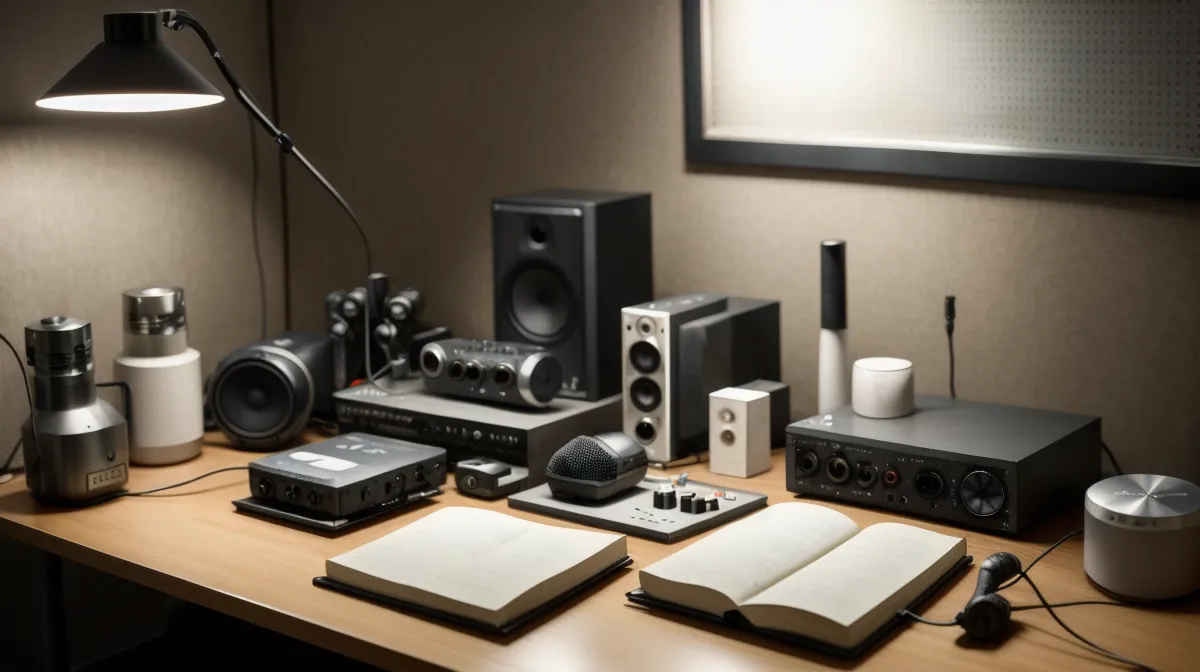
I did a good chunk of this comparison testing at a folding table in a back room at the house — laptop, a USB interface, a notebook I've filled up faster than I expected to — with the window shut against yard noise so filter differences weren't getting lost under wind or a neighbor's mower. For a deeper look at picking plugs built specifically for performance and touring work, I covered that separately in How to Choose Professional Earplugs for Musicians and Live Sound Techs.
None of this undoes the notch already cut into my hearing, and it won't turn off the tone I deal with every time a room goes quiet. But I'm not a doctor, and nothing here replaces an actual hearing exam if something changes suddenly or the ringing starts behaving differently - that conversation belongs with an audiologist, not a website. What I can do is make sure the younger techs I work around understand that the right earplugs aren't a compromise between hearing nothing and hearing everything. They're just calibration, same as anything else on the gear list.
This site is for informational and entertainment purposes only. I am not a licensed healthcare provider, financial advisor, or attorney. Seek professional counsel before making any health or financial decisions.